Wednesday, September 9, 2015

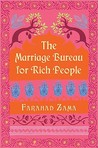
The Marriage Bureau for Rich People by Farahad Zama (review by Shannon H. '16)

The Marriage Bureau for Rich PeopleThe Marriage Bureau for Rich People by Farahad Zama
My rating: 3 of 5 stars

Overall, this book was a fun read -- I enjoyed learning about marriage practices in India (although I am not entirely sure how accurately the practices are portrayed). The depiction of modern India resonates with me; I understood the ever-present inequality and the social turmoil, and I felt the heated debates between traditional cultural values and modern interpretations of humanity. However, I found that the novel dissolved from a potential critique of the system into a contrived love story between a rich Brahmin male (upper class) and a poor, but still Brahmin, working woman. I was mildly disappointed, but I still found The Marriage Bureau for Rich People a quick and fun read.

View all my reviews

Tuesday, September 8, 2015

The Pentagon's Brain by Annie Jacobsen (review by Enya L. '19)

The Pentagon's Brain: An Uncensored History of DARPA, America's Top-Secret Military Research AgencyThe Pentagon's Brain: An Uncensored History of DARPA, America's Top-Secret Military Research Agency by Annie Jacobsen
My rating: 4 of 5 stars

The Pentagon's Brain: An Uncensored History of DARPA, America's Top-Secret Military Research Agency, is original, provocative, and unforgettable. Starting with the nuclear device Castle Bravo, to the biomedical engineering of limb regeneration, Annie Jacobsen takes us behind-the-scenes to show what military technology is really doing. As a history book, this book was far from boring. Jacobsen's writing is fluid and nothing like the writing in textbooks. The topics outlined in the book are very interesting and sometimes altogether shocking. However, given Jacobsen's reputation, some scenes, I felt, strayed a bit far from reality. While most of the facts were taken from many sources, some "facts" only came from one source. All in all, whether you take it as fact or fiction, The Pentagon's Brain is a very enjoyable ride.

View all my reviews

Monday, August 31, 2015

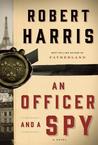
An Officer and a Spy by Robert Harris (review by Mr. Silk, Teacher)

An Officer and a SpyAn Officer and a Spy by Robert Harris
My rating: 4 of 5 stars

Falling somewhere between history, historical fiction and spy novel, An Officer and a Spy is a fact-based account of the Dreyfus Affair, one of the more troubling times of the French military. When Alfred Dreyfus is accused and convicted of treason, it takes the newly appointed head of the French spy division, Georges Picquart to ferret out the truth. Robert Harris is a master story-teller, and this book is surely a page turner. At times the story seems unbelievable, or, at best, inconceivable, but the reader has to remember that all the events did actually occur. A definite must for anyone who has read and enjoyed Harris or Jean le Carre, or who is interested in French history.

View all my reviews

Friday, August 28, 2015

Sala by Toni Morrison (review by Andrew R. '17)

SulaSula by Toni Morrison
My rating: 3 of 5 stars

I chose Sula as my first introduction to Toni Morrison’s work because it was slimmer, lighter, and—apparently—easier to understand than her more famous and acclaimed novels, but now that I’ve finished the last chapter I find myself wondering if this book is really representative of Morrison’s greater oeuvre. The plot sounds deceptively peaceful: young black Sula leaves her small hometown behind as she heads off to be educated, and upon her return ten years later (a significant gap in the novel’s chronology), she’s estranged and distrusted by her former friends. You can’t call Sula “peaceful,” though, because Morrison fills its pages with wanton, almost casual violence and death. A mother soaks her son’s mattress in gasoline and sets it alight; a woman burns to death trying to light a yard fire; a little boy slips from his friends’ fingers and falls into the lake, never resurfaces. Hard as I try, I can’t reconcile these near-constant, near-faceless deaths with the practices of “good novel-writing” that I’m used to, and so for the moment Sula seems more off-putting and grim than I’d wish. Maybe someday, when I’m more familiar with the rest of Morrison’s novels, I’ll be able to return to Sula and appreciate, or at least understand, its pervading sense of randomness and cruelty.

View all my reviews

Thursday, August 27, 2015

The Fire Next Time by James Baldwin (Review by Daphne Y. '16)

The Fire Next TimeThe Fire Next Time by James Baldwin
My rating: 5 of 5 stars

The Fire Next Time, written by the legendary 1960's Civil Rights advocate James Baldwin, is a book every adolescent and young adult living in the United States should read. For the first half of his book, James Baldwin writes a letter to his nephew who is incarcerated, trying to inspire him to transcend anger in dealing with an unjust society. In the second half, the author writes about his own childhood growing up as an African-American boy in Harlem, and also his views upon the influence of Christianity on race relations. Though published in 1963, the book brings to light a problem that still exists today: a broad recognition of the inequity between races, but hardly any cooperation or a change in mindsets to be made. This book, with all its emotions, from thrilling to frustrating, is definitely something we should all read to educate ourselves about the state of our society, not just in the past, but also in the present.

View all my reviews